Environmental Solutions
Asbestos Management
Asbestos is a set of six naturally occurring silicate minerals used commercially for their desirable physical properties such as extremely low inflammability. They are all thin fibrous crystals. Mining of asbestos goes back more than 4000 years.
Unfortunately, asbestos bears strong health risks: the prolonged inhalation of asbestos fibres can cause serious illnesses including malignant lung cancer. Therefore the trade and use of asbestos have been restricted or banned in many jurisdictions.
Bridges Environmental provides a closed-circuit solution from identification of the problem to the disposal. Our experts will also stand by at critical moments of the process.
Identification and assessment
A fibre cannot be identified or ruled out as asbestos, either using the naked eye or by simply looking at a fibre under a regular microscope. The most common methods of identifying asbestos fibres are by using polarised light microscopy or transmission electron microscopy, which is more precise and can be used at lower concentrations of asbestos.
Transportation
Utmost care in treatment is also applicable for any transportation of asbestos. Bridges Environmental is licensed and able to guarantee state-of-the-art transportation of asbestos.
Disposal
In most developed countries, asbestos is typically disposed of as hazardous waste in landfill sites.
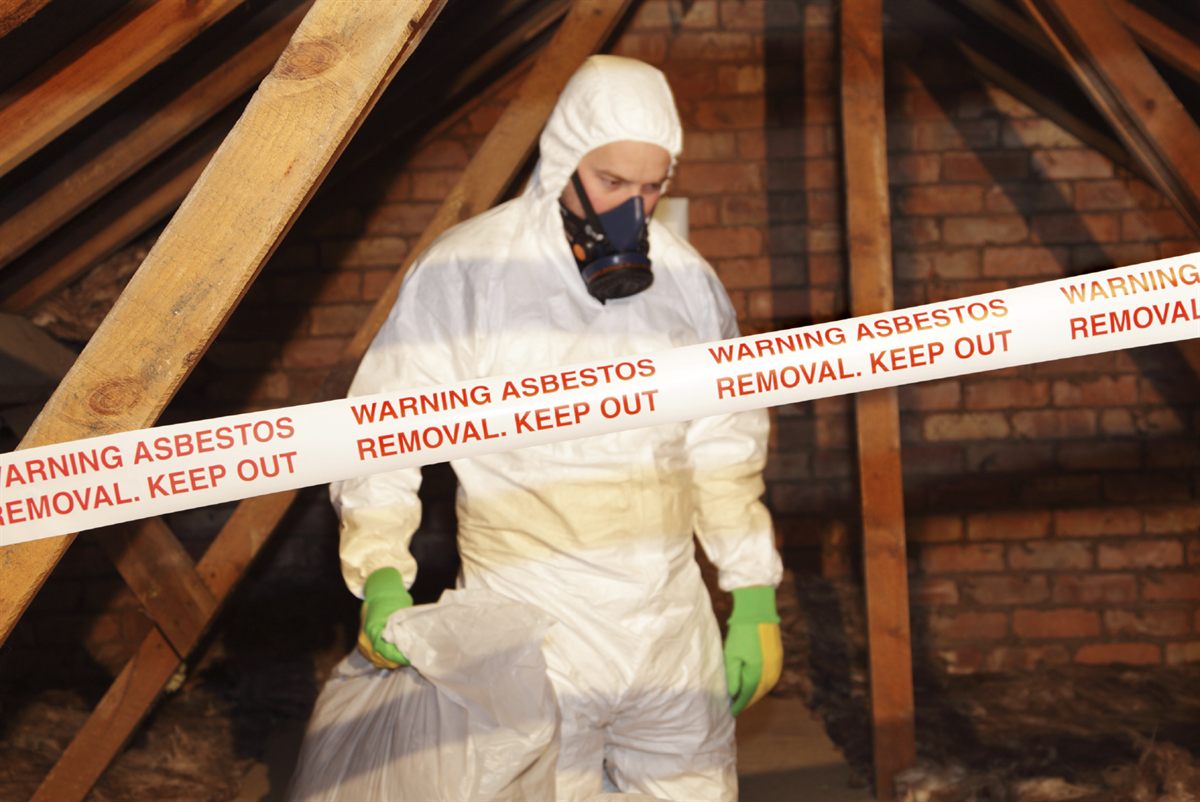
The demolition of buildings containing large amounts of asbestos-based materials poses particular problems for builders and property developers – such buildings often have to be deconstructed piece by piece, or the asbestos has to be painstakingly removed before the structure can be razed by mechanical or explosive means.
Asbestos can be transformed into harmless silicate glass. A process of thermal decomposition at 1000–1250 °C produces a mixture of non-hazardous silicate phases, and at temperatures above 1250 °C it produces silicate glass. Microwave thermal treatment can be used in an industrial manufacturing process to transform asbestos and asbestos-containing waste into porcelain stoneware tiles, porous single-fired wall tiles and ceramic bricks.